Can a Debt Collector Sue Me for Old Debt? What You Need to Know in 2026
Can a Collector Legally Sue Me Even if the Debt Is Very Old?
Yes, a collector can file a lawsuit no matter how old the debt is. There is no federal law that permanently stops them from suing. What the law does provide, through each state's statute of limitations, is a defense you can raise in court.
If the debt is time-barred and you show up to court and assert that defense, the case should be dismissed. The critical problem is that a huge share of people never respond. According to Pew Charitable Trusts research, more than 70 percent of debt lawsuits end in a default judgment, meaning the collector wins automatically because the defendant did not appear or answer. If that happens, even an expired debt can result in a judgment against you.
That is why learning about being sued for a debt matters even before you receive a summons.
What Is the Statute of Limitations on Debt, and How Does It Work?
The statute of limitations is the window of time during which a creditor or debt collector can successfully sue you in court to collect a debt (CFPB). Once that window closes, the debt is "time-barred."
The clock typically starts on the date you last made a payment or the date of your last activity on the account, though some states use the date the debt first went delinquent. The exact start date matters, so checking your account statements or credit report is a good first step.
Time-barred does not mean the debt disappears. Collectors can still call you, send letters, and report the debt to credit bureaus within credit reporting time limits. What they cannot do is win a lawsuit in court on an expired claim, unless you accidentally revive it.
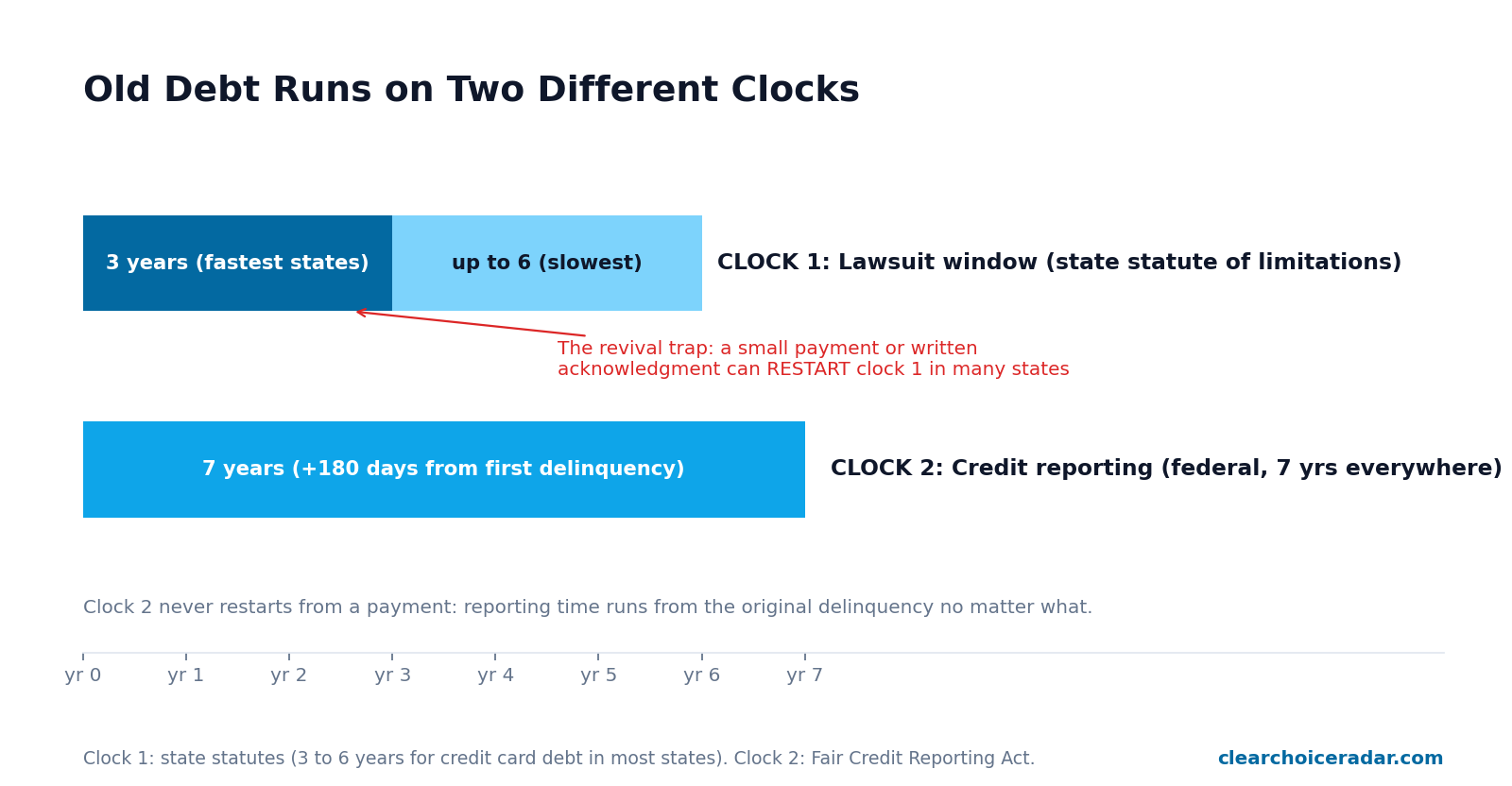
How Long Does a Collector Have to Sue? State-by-State Differences Are Dramatic
This is where the answer gets very specific, and the differences between states are large. Here is what the verified state rules say:
- North Carolina: 3 years for most consumer debts, one of the shortest windows in the country.
- New York: 3 years for consumer credit card debt, after a 2021 law change lowered it from 6 years.
- Texas: 4 years. A 2019 law means that payment on a time-barred debt does NOT revive it, and debt buyers are prohibited from suing on time-barred Texas debt.
- California: 4 years for written contracts and credit cards. Suing on an expired debt is barred, and collectors must disclose that the debt is time-barred (CFPB).
- Georgia: 6 years for credit card debt. Revival requires a written acknowledgment; a bare partial payment alone does not restart the clock.
- Illinois: 5 years for credit card debt, treated as an unwritten contract under state law.
These six states alone show a range of 3 to 6 years, and the rules about what restarts the clock vary just as much. Always verify your own state's current law through your state attorney general's office or a licensed attorney.
For a deeper look at your rights once a debt has passed the legal deadline, see our guide on time-barred debt.
What Is a Revival Trap, and Can a Small Payment Really Restart the Clock?
In many states, yes, making even a small payment on an old debt can restart the statute of limitations clock from scratch. This is called "reviving" the debt, and it is one of the most costly mistakes consumers make.
Here is how the rules differ by state:
- States where payment CAN revive the debt: Many states still follow common law that treats any payment as a fresh acknowledgment, restarting the entire limitations period.
- Texas: Payment on a time-barred debt does NOT restart the clock, by statute (2019 law).
- New York: By law, no payment or written affirmation can revive an expired consumer debt after the 3-year limit.
- Georgia: A bare partial payment alone does not revive the debt; revival requires a written acknowledgment.
Verbal acknowledgments also carry risk. In some states, saying "I know I owe this and I'll pay when I can" over the phone has been argued as revival evidence. Treat any communication with a debt collector carefully.
If a collector contacts you about a very old debt, understanding the full debt collection process from first contact through lawsuit is worth doing before you respond.
What Should I Do If I Am Served With a Lawsuit Over Old Debt?
The single most important step is to respond before the deadline. Ignoring the summons is almost always the worst choice. As noted above, more than 70 percent of debt cases result in a default judgment where data exists, simply because defendants do not answer.
Here is a basic action checklist:
- Note the response deadline. It is written on the summons and varies by state and is often just a few weeks from service.
- Check the date of last activity. Pull your credit report and any old statements to figure out when the clock started.
- Compare to your state's statute of limitations. If the debt is time-barred, that is a legal defense you can raise.
- Send a written debt validation request. You have the right to request verification (CFPB). See our explainer on the debt validation notice and the 30-day dispute window.
- Consult a consumer law attorney. Many handle debt lawsuits on a contingency or low-cost basis, and some states allow you to recover attorney fees if the collector violated the FDCPA.
If a judgment is entered against you, collectors may pursue wage garnishment limits. You can estimate your exposure with our wage garnishment calculator.
Can Collectors Still Damage My Credit Report After the Statute of Limitations Expires?
Yes. The statute of limitations and the credit reporting time limit are two completely separate clocks. Even after a debt is time-barred for lawsuit purposes, it can still appear on your credit report for up to 7 years from the date of first delinquency under the Fair Credit Reporting Act (CFPB).
This means a debt that is too old to sue you over may still affect your ability to get a loan, apartment, or job. The two clocks run independently, and typically the credit reporting window runs longer.
If the same old account is being reported inaccurately, such as with a wrong balance, wrong dates, or reported multiple times after being sold to different collectors, you have the right to dispute it with the credit bureaus.
What Are My Options If Old Debt Has Become a Crisis?
If multiple old debts have surfaced or a lawsuit is already in progress, you have more structured options than simply hoping the statute of limitations saves you.
- Debt settlement: Negotiating a lump-sum payment for less than the full balance. Be aware that forgiven debt may be taxable income and you may receive IRS Form 1099-C (IRS.gov) unless you qualify for the insolvency exclusion.
- Debt consolidation: Combining multiple debts into a single lower-interest payment.
- Debt management plans: A structured repayment program through a nonprofit credit counselor, typically with reduced interest rates (FTC).
- Alternatives to bankruptcy: Other relief options before considering a formal filing.
Watch out for companies that charge fees before settling any debt. The FTC's Telemarketing Sales Rule prohibits advance fees for debt relief services sold over the phone (FTC). You can also browse our debt collection questions answered hub for plain-language guidance.
To compare vetted options for addressing old debt, see the best debt relief companies.
Legal Disclaimer
General information only; not financial or legal advice. Debt relief options carry risks including credit score impact and potential tax liability on forgiven debt. Statute of limitations rules change; verify current law with your state attorney general's office or a licensed attorney in your state. Consult a qualified financial advisor or attorney for advice specific to your situation.
Related Debt Relief guides
- Debt settlement
- Debt consolidation
- Debt management plans
- Alternatives to bankruptcy
- Time-barred debt
- Medical debt
- Canceled debt
- Debt relief scams
- Debt payoff
- Debt collection process
- Debt validation notice
- Sued for a debt
- Wage garnishment limits
- Wage garnishment calculator
- Debt-to-income calculator
- Debt validation letter generator
- Statute of limitations on debt by state
- Debt collection complaint statistics
- Average credit card interest rate
- Debt collection questions answered
Sources
General information only; not financial or legal advice. Debt relief options carry risks including credit score impact and potential tax liability. Consult a qualified financial advisor for advice specific to your situation. Last updated July 2026.