Do You Need an LLC for a Side Hustle? An Honest Decision Guide
What an LLC actually does
One thing, mainly: it separates the business's debts and legal liabilities from your personal assets. If the business is sued or cannot pay its debts, a properly maintained LLC generally keeps the claim away from your house and savings. That separation is real, but it is not magic: it does not protect you from your own professional negligence, personal guarantees you sign, or liabilities you would have anyway.
What an LLC does not do by default: lower your taxes. A single-member LLC is a disregarded entity to the IRS. The income lands on your personal return on Schedule C exactly as it would without the LLC, self-employment tax included. Tax elections that change this exist, but they are separate decisions with their own tradeoffs, not something the $0 formation button does for you.
What it costs, honestly
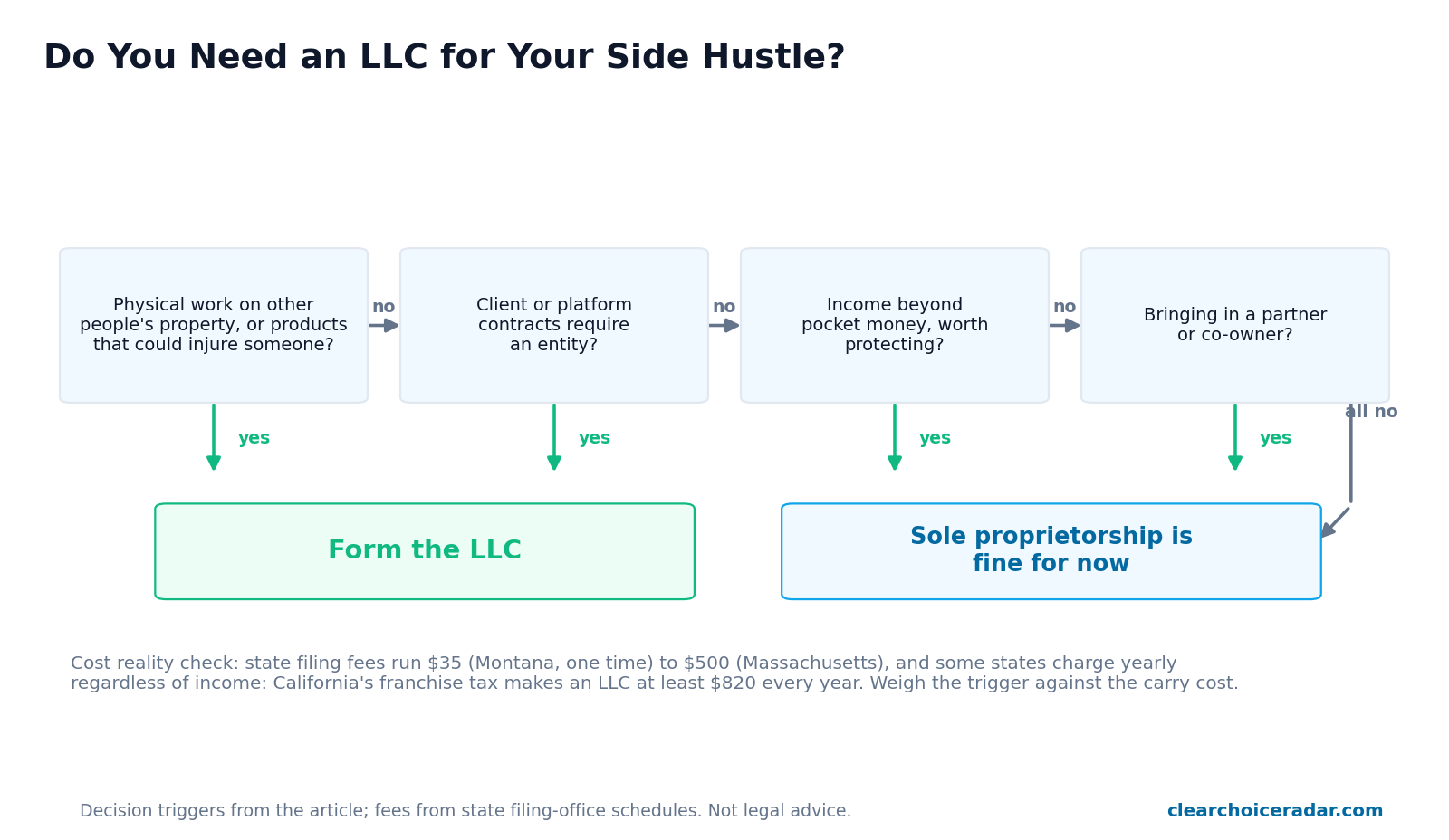
The formation service's price is the small number. The state's numbers are the ones that matter, and they vary wildly: forming runs from $35 in Montana to $500 in Massachusetts, and the recurring cost runs from zero in several states to an $800 annual franchise tax in California that is owed whether or not the business makes a dime. Our LLC costs by state table has every state's filing fee, report fee, and the franchise taxes, verified against the official fee schedules.
Add the optional layer: a registered agent service at $125 to $249 per year if you do not serve as your own, and whatever the formation service upsells. A California side hustle inside an LLC costs at least $820 a year before it earns anything; a Missouri one can cost $50 once and nothing after.
When the LLC starts earning its keep
- Real liability exposure. You are doing physical work on other people's property, selling products that could injure someone, or giving advice businesses rely on.
- Contracts and clients that require it. Some companies will not onboard unincorporated vendors; an LLC (plus an EIN) is the standard fix.
- The income is no longer pocket money. As revenue grows, so does what a claimant could come after, and so does the value of clean business-personal separation, including a dedicated bank account.
- A partner joins. Two people sharing revenue without an entity and an operating agreement is a dispute waiting for a courtroom.
When it can wait
Low-risk service work with modest income often has a cheaper, better protection: insurance. A general liability or professional liability policy pays claims; an LLC only contains them. Plenty of freelancers carry a policy for a few hundred dollars a year and form the LLC later, when a client requires it or the income justifies it. If your side hustle is selling crafts, tutoring, or freelance writing measured in hundreds of dollars a month, the state franchise tax can exceed the risk you are containing.
If you do form one, the order of operations
- Check your state's real costs first, formation and recurring, on the state table. Form in your home state unless you have specific advice otherwise; forming elsewhere usually means paying two states.
- Decide the registered agent question: serving as your own is free and legal in most states if you have an in-state street address and do not mind it becoming public record.
- Get the EIN directly from the IRS. It is free at irs.gov; paying a service $99 for it buys you a form-filler.
- Open a separate bank account and keep it clean. Mixing personal and business money is the classic way courts justify ignoring the LLC when it matters most.
Related Business Formation guides
Sources
General educational information only; not legal or tax advice. State fees and requirements change; verify with your state's filing office. Consult an attorney or tax professional about your situation. Last updated July 2026.